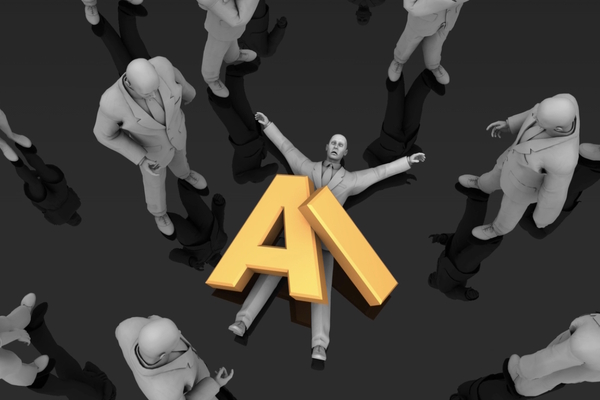

When enterprise AI pilots succeed, they can quietly become a risk to security and safety, demanding governance that evolves from experimentation to ongoing operational control
Cyber risk is changing, and many organisations are struggling to keep the pace. That was the message of a Business Reporter dinner at the House of Lords, hosted by Obrela.
Nvidia has told Chinese clients it is evaluating adding production capacity for its powerful H200 AI chips after orders exceeded its current output level, according to two sources briefed on the matter.
Citigroup has set a year-end target of 7,700 for the S&P 500 index for 2026, pointing to robust corporate earnings and sustained tailwinds from artificial intelligence investments.
Shadow AI has become pervasive, exposing businesses to potential data leaks, compliance breaches and reputational damage – and a lack of oversight is to blame
Digital transformation has led to the convergence of IT and OT. That convergence has brought about many benefits, but it is also the source of significant risks
The rapid adoption of artificial intelligence (AI), including large language models (LLMs), is creating new opportunities but also new uncertainties, said Charlotte Wilson, Head of Enterprise Business UKI at Check Point, introducing a TEISS dinner at the Conrad London St James Hotel.
For Kevin Schwarz, Head of CTO at Zscaler, a crisis of trust is the central challenge in cybersecurity. “We’re questioning our trust in the solutions we’ve relied on,” he told guests at a recent TEISS dinner, sponsored by ZScaler and BT, at the House of Lords. Segmentation alone is proving insufficient as attack volumes rise, and trust in cloud services is being undermined by geopolitical concerns.
Europe’s cyber-defences are not only challenged by external threats. They are undermined by dependencies: on non-European cloud providers, foreign security tools and opaque software supply chains.
With the cyber-security sector already reaping the benefits of established practices and partnerships geared towards employing more women and neurodiverse people in tech roles, other sectors struggling with skills shortages are likely to follow suit