


The American view: Finding joy in Turkey’s AI-powered nostalgia



I’ve come to the conclusion that I’ve been unfairly harsh in my caustic scepticism of Generative AI tech. To be sure, I’m still miffed about the staggering resources dedicated to GAI. The breathless, nearly ecstatic hype cycle surrounding it remains excruciating.
Still, if I was put under oath today, I’d be forced to admit that I no longer think it’s all bad. I’ve become quite taken with a tiny intersection of creative whimsy and social media. I’ve had to accept that there is some GAI output that makes the world a little brighter … and that it comes from Turkey.
No, really. And before I explain why I’m carving out this exception, let me state unequivocally that engineered mis- and disinformation are strategic-level long-term problems for humanity that must be addressed as soon as possible. Misuse of GAI tech is just as harmful as the misuse of every other form of communication, especially when bent towards deception. There’s no way around the misuse problem, but — to be fair — that’s the same problem that’s plagued every other technological development since the introduction of flint hand tools.
We are, and I cannot stress this enough, completely fucked. https://t.co/NKuGsJtXiy
— Kyle (@SonOfUhGunn) August 29, 2025
That said, the sliver of GAI space that I’ve come to treasure is incredibly niche. Two years ago, I stumbled across social media posts from a fellow in Turkey whose hobby is using GAI to craft cartoonish original images that highlight moments from the previous century that never happened – but should have. I find their daily posts to be mental catnip; I’ve been using their artwork as fodder for my own creative itch: that is, when the creator posts a new image, I make a joke about it in the comments, and the two of us share a laugh. It’s become a regular thing.
The creator’s nom de prompt is “Obeca,” and they post from somewhere in Turkey. I don’t speak any Türkçe; fortunately, Obeca speaks idiomatic English and possesses a solid understanding of American pop culture. Those talents made it possible for me to interview them this week and get their perspective for this column. [1]

I first asked Obeca what got them started creating hilarious pictures of a past that never was. I assumed they were sketching, painting, or writing about these things before they started using GAI and I was sort of right.
“A long time ago,” Obeca explained, “I used to fill notebooks with little writings, mostly short stories. I also tried to make cartoons and comics but, unfortunately, I wasn’t very talented at drawing.”
That struck a chord. I used to draw cartoons in the margins of my homework (much to the irritation of my high school maths teacher). They weren’t good by any stretch and were rarely funny enough to be worth reading.
Obeca explained how the need to express themself never really went away. “Many people around me — especially [my sibling] — are motorcycle fanatics. In my opinion, a vehicle is supposed to be used to get you from point A to point B. But for motorcycle people it’s the exact opposite; they look for A and B points just to satisfy their need to ride.”
I get that. Most of the people I know treat vehicles as appliances.
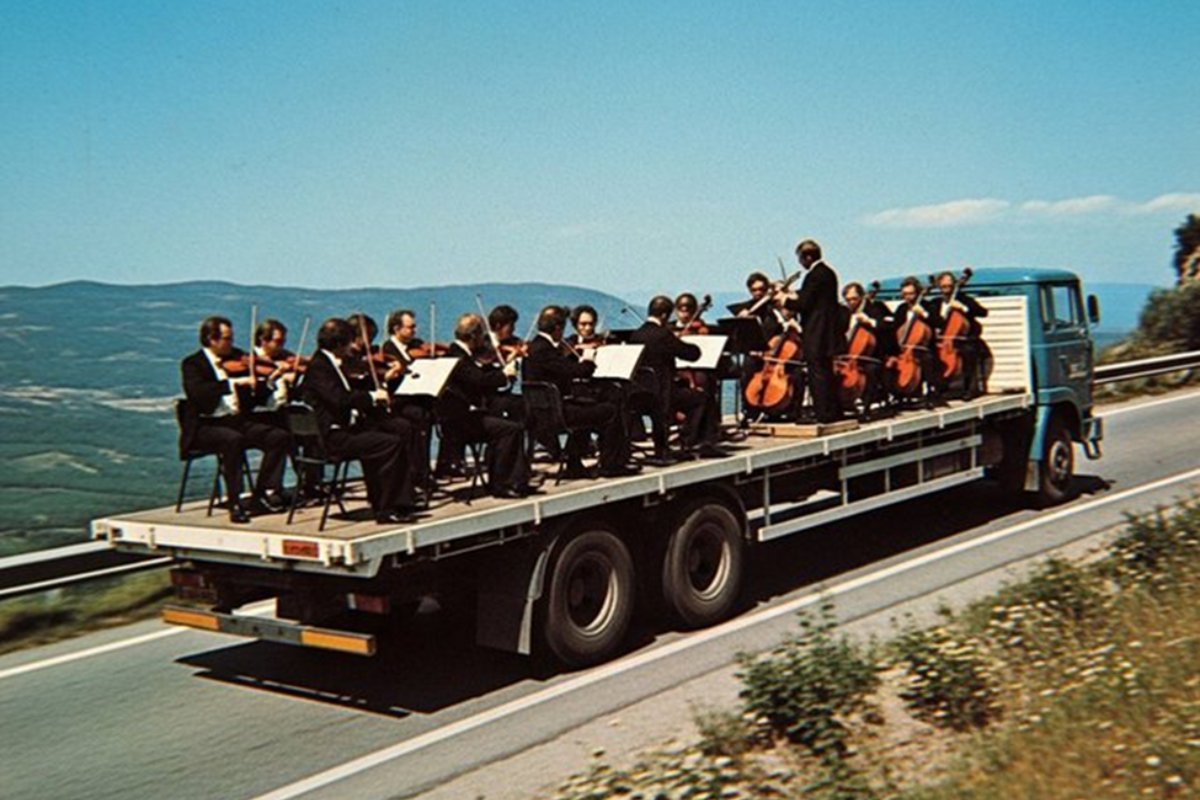
Obeca continued, “I see AI art in a similar way. When I first encountered this technology, I thought, ‘What can be done with this tool?’ Using it gave me great joy; for someone like me who couldn’t create visuals through traditional means, it felt like an incredible invention. Later, as I came to understand how these models work, I realized I could finally satisfy the urge to make cartoons that I had buried years ago.”
That struck a deep chord. Discovering a way to satisfy your creative side is a joyful experience. That’s why I’ve been writing this monthly column and my weekly column over on Business Reporter for about thirteen years now. The process is satisfying in and of itself.
Curious, I asked Obeca why they’d chosen the style they’re known online for. After some thought, they mused, “I think the 1970s were a kind of peak for humanity in many ways. … I simply love the 1970s aesthetic. I love the colours and moods of films and photos from that era. The ’70s are also a distant time I vaguely recall from my childhood. I enjoy taking things from today’s world or even imagined futures and presenting them as if they were ordinary objects of that decade.”
That tracks. Personally, I found the 1970s to be hopelessly bland. It was called the “Malaise Era” for good reasons. Everything everywhere seemed to be coloured in dull earth tones and stained with cigarette smoke residue. Life seemed to move slower, presumably because all the world’s hairspray and cocaine were being stockpiled for the 1980s. Still, there was a distinct mood to the 1970s that I’ve never forgotten. Seeing that mood celebrated through a talented satirist’s perspective is — in local parlance — a “hoot.”
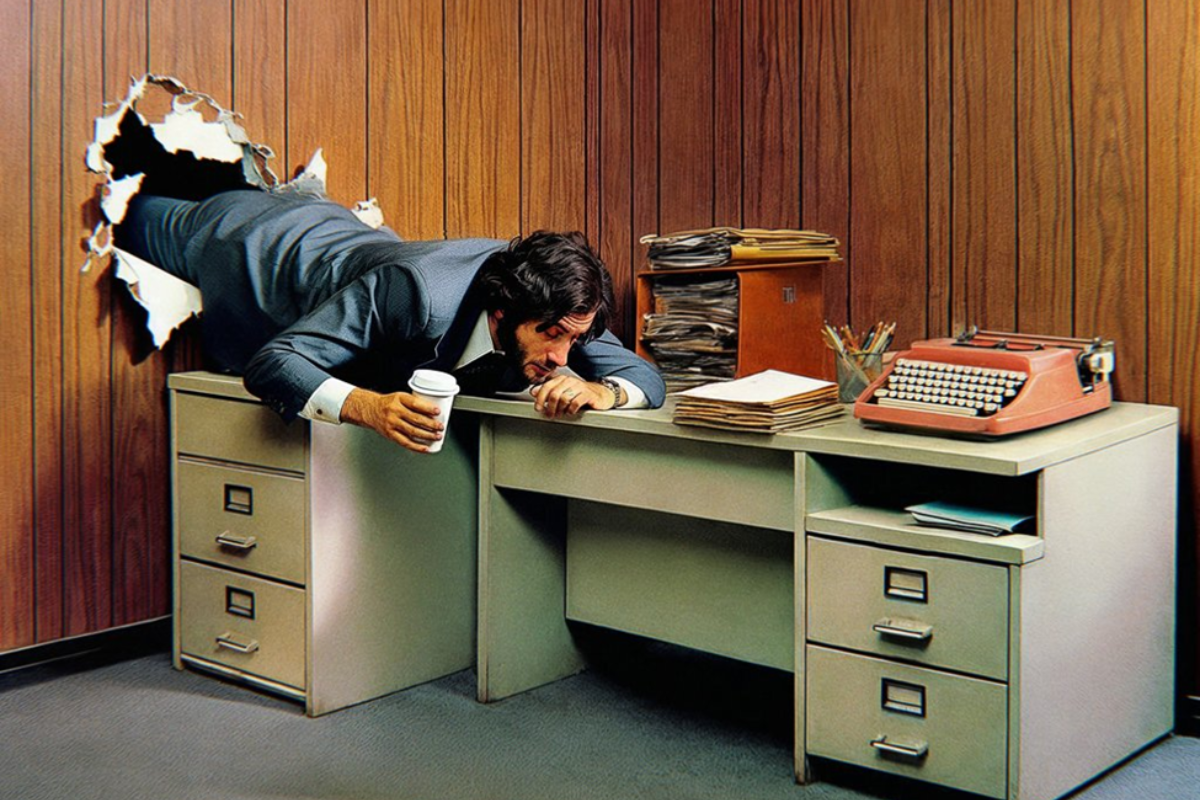
I asked Obeca what motivated them to keep at it, since their creative efforts are both time consuming and unpaid labour. They explained, “I genuinely have fun during the creative process. First off, writing prompts often feels like writing short stories, which is already enjoyable in itself. Then, when the AI model produces exactly what I had in mind and I see the image I imagined come to life, it’s a wonderful feeling. For someone who can’t draw, it’s almost like casting a spell.
As my comparative religions profession from uni loved to quote, “at that moment, the monk was enlightened.” I got it. Yeah, GAI is a monstrous resource hog that mostly fills the world with garbage, but so is the big-I Internet and I use the living hell out that that every bloody day. The small gifts that these technologies have brought us might not outweigh the harm they’ve caused along the way, but they’re a compelling reason to reform and tame the tech rather than burn it all to the ground and salt the data centres.
I look forward to Obeca’s creations every day. They give me a laugh, and I strive to give him one in return with a goofy take. There’s no way to tell how many people might have seen our exchanges in their feed. Hopefully they got a laugh as well. It’s a way to make life an infinitesimally less awful experience for a few seconds which, I figure, makes it all worthwhile. Okay, maybe not all worthwhile but … you get what I mean. I hope. If not, take a look at Obeca’s portfolio. I’m sure there’s something there that’ll make you grin like a child again.
[1] I’m being deliberately vague and indistinct about Obeca’s identify at their request.





Most Viewed
The Expert View: Achieving Resilience in the Age of AI and Cyber WarfareSponsored by BT & Zscaler


Winston House, 3rd Floor, Units 306-309, 2-4 Dollis Park, London, N3 1HF
23-29 Hendon Lane, London, N3 1RT

020 8349 4363

© 2025, Lyonsdown Limited. teiss® is a registered trademark of Lyonsdown Ltd. VAT registration number: 830519543