
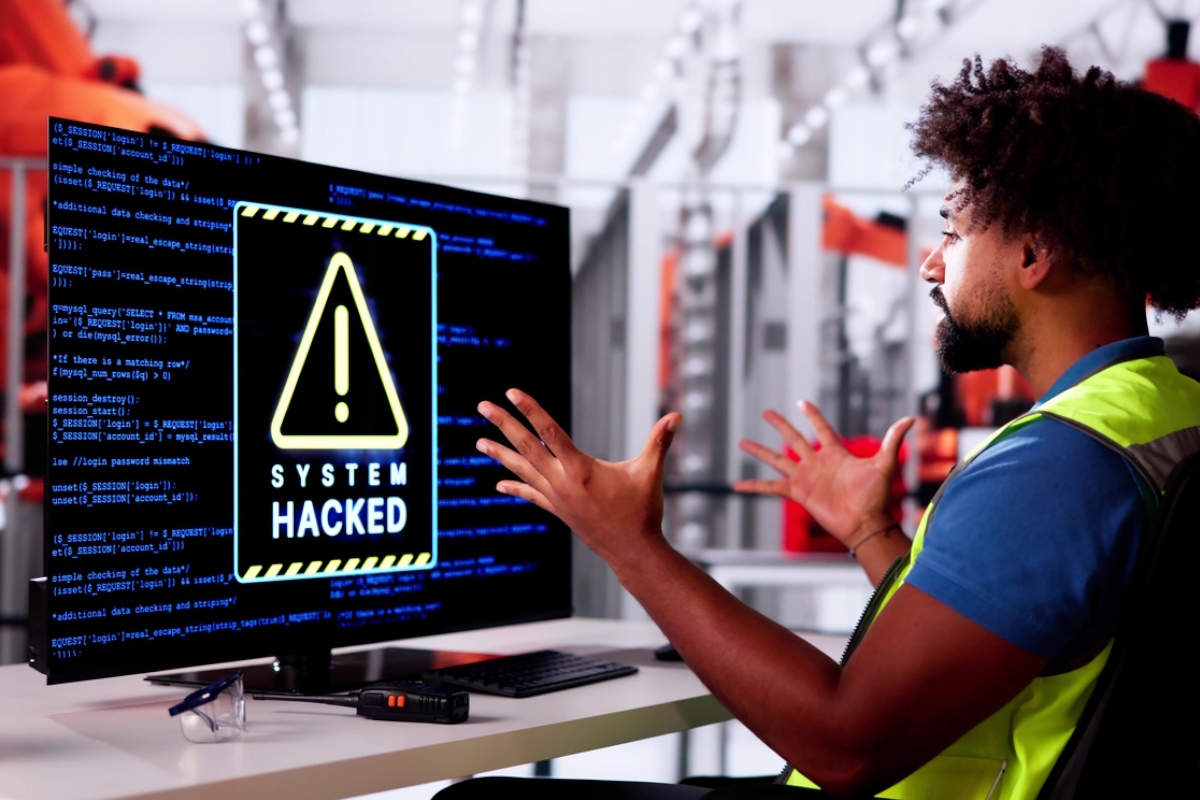




When a cyber-attack hit Jaguar Land Rover’s (JLR) global production in August, the impact was immense. Production lines across five countries ground to a halt. Suppliers were locked out of core systems and employees were sent home while JLR attempted to contain the damage. Analysts estimate that the outage cost the company more than £50 million GBP a week.
But the attack didn’t just impact JLR and its customers. In its wake, JLR’s Tier 2 and Tier 3 suppliers, many of them mid-sized manufacturers, suddenly found themselves cut off from orders and unable to fulfil contracts. One supplier was forced to temporarily shut its Slovakian plant, and others have since warned of potential insolvency.
This attack is a wake-up call for the manufacturing industry. Cyber-attacks like these have the potential to cascade down the entire supply chain and cause irreparable damage.
For the third year running, manufacturing remains the most targeted industry for cyberattacks globally. The average cost of a breach is $4.76 million, with 15% tied to supply chain compromise.
The reasons why attackers keep coming back is simple: because it works. Manufacturers have a whole host of vulnerabilities for attackers to exploit. Many factories still rely on legacy systems that weren’t built to withstand modern cyber-threats. Production schedules can’t tolerate disruptions, and interconnected supply chains mean that even a short outage can quickly ripple through suppliers and partners.
With slim profit margins and downtime sensitivity, leaders are more likely to feel the pressure to pay ransoms just to get operations back up and running. And for mid-sized manufacturers, these pressures are especially acute. They face the same level of threat as global enterprises but often lack the depth of resources or in-house cyber-security expertise to withstand an attack.
In modern manufacturing, where IT and operational technology (OT) are deeply intertwined, cyber-security needs to be seen as an issue of operational resilience and not just an IT concern. If your ERP, MES, or supplier portals go down, you lose more than visibility — you lose capacity, customers, and control.
Cyber-security is fundamental to business continuity. If systems are offline, your shop floor is offline. As a first step, every organisation should have a clearly defined incident response plan that outlines who’s responsible for what when a breach takes place.
Next, it’s vital to protect against human error, which remains one of the most common entry points for attackers — phishing scams, stolen credentials, and poorly configured access controls account for the majority of breaches in manufacturing. Enforcing best practices like multi-factor authentication, role-based access, and ongoing security training can strengthen protective guardrails and even small measures can have an impact.
The same goes for technology itself. If your systems are vulnerable, your entire operation is vulnerable. That’s why it’s important to build strong defences around essential solutions. Whether that’s investing in cloud platforms with built-in encryption and real-time monitoring, working with vendors that offer 24/7 managed security services, ensuring regular patching and audit trails, or securing factory protocols with encryption, segmentation, and traffic monitoring. Legacy systems weren’t designed to withstand today’s level of cyber-threat, so modernising and strengthening defences is key.
Finally, manufacturers need to know their supply chain exposure. Supply chain risk has become one of the most critical parts of cyber-resilience and understanding which partners have access to your systems and which dependencies you have upstream is key. Understanding how quickly you can respond if a key supplier goes offline can be the difference between a controlled recovery and an operational shutdown.
Most mid-market manufacturers won’t make headlines when an attack hits, but the consequences can be just as severe. That’s why it’s more important than ever to prioritise cyber-security and focus on protecting both the systems and the people that keep production running.
As we head into 2026, the factory floor is turning into a digital battleground. Resilience is everything, and manufacturers need to arm their defences.
Dan Houdek is Senior Director, Product Marketing for Manufacturing and AI at Epicor
Main image courtesy of iStockPhoto.com and AndreyPopov
Winstone House, 3rd Floor,
Units 306-309, 2-4 Dollis park,
London, N3 1HF
020 8349 4363
© 2026, Lyonsdown Limited. teiss® is a registered trademark of Lyonsdown Ltd. VAT registration number: 830519543
