



ao link
Affino
Search Teiss
My Account
Remember Login
My Account
Remember Login

Securing small businesses with RAG-based AI

Small and medium-sized businesses (SMBs) are continuing to prove a prime target for cyber-criminals, with one in three in the UK and US suffering an attack last year. This includes opportunistic phishing and ransomware to full-scale breaches.


These attacks carry a financial sting, with a 2025 Mastercard survey finding nearly one in five small businesses suffering an attack then filed for bankruptcy or closed their business entirely. The reality of the threat landscape is that SMBs face the same level of increasingly sophisticated attacks, with fewer staff and smaller safety nets.


As cyber-criminals continue to exploit thin teams, SMBs need to tackle the core factors that leave them exposed – namely over-stretched staff, limited time and technology stacks that lag behind modern threats. While larger companies can settle fines, pay ransoms and invest in tailored AI solutions, smaller businesses can’t. They need tools that stretch every pound and help them move faster without increasing risk – and this is where retrieval-augmented generation can help.


Lowering the barrier to secure AI

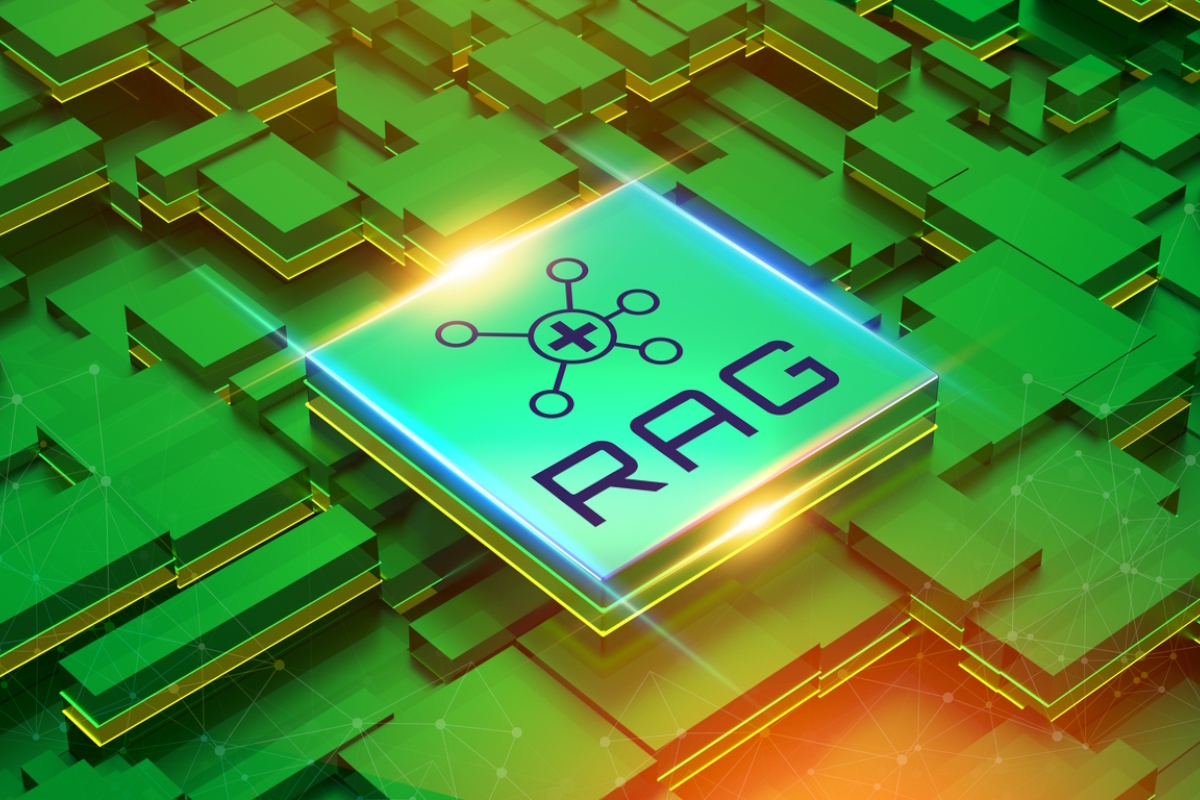
AI is central to the security conversation, yet building bespoke models remains costly and resource intensive. However, Retrieval-Augmented Generation (RAG) offers a more realistic option for those with fewer resources. Instead of pulling information solely from LLMs that are more likely to guess or hallucinate, RAG systems retrieve verified information from trusted sources (internal or external) before producing a response.  For time-poor IT managers and small security teams, it delivers instant access to internal documentation, threat intelligence and incident-response playbooks, while keeping private data secure.


Until recently, only large enterprises had the budget and expertise to experiment with RAG. Building retrieval pipelines, maintaining vector databases and tuning models required deep technical investment. RAG-as-a-service has broadened accessibility by delivering the same capabilities through a secure, scalable SaaS platform. As a result, SMBs can adopt advanced AI without having to build or maintain it themselves.


This gives smaller organisations access to capabilities once reserved for large enterprises. Still, a retrieval system can only surface what you feed it, so keeping internal material current matters as much as the technology itself. Rather than navigating model tuning, teams can focus on using AI-driven insights to strengthen their defences and analyse large security datasets – tasks that previously demanded expert knowledge. Crucially, this is delivered through an environment with integrated security and compliance frameworks that are typically challenging for smaller teams to replicate alone. In short, with cheaper infrastructure costs, teams can focus on using AI insights instead of attempting to integrate AI.


The governance case for retrieval-based AI

As with all AI technologies, adoption and use must be underpinned by strict governance and discipline. RAG-as-a-service providers should mirror the safeguards SMBs expect from all systems: solid encryption for all data transfers, clear separation between customer environments and transparency into how information is retrieved and stored. If data sovereignty is required, providers must be able to host and process data in approved regions.


Alongside robust governance, auditability is non-negotiable for RAG implementations. Every query and output generated should leave a visible trail that can be reviewed for accuracy and compliance. This transparency is beneficial on multiple fronts. From a direct audit standpoint, this satisfies regulations such as GDPR, HIPAA and SOC 2. A good audit log acts as a feedback loop, flagging outdated content and improving retrieval accuracy.


Not all risks are created equal

For organisations handling sensitive data, such as financial records, patient health information or government contracts, the consequences escalate quickly if something goes wrong. This makes updated and strong defences even more crucial. SMBs in these sectors are working with thin margins of error, where a single compliance violation or data breach can be both financially and reputationally damaging. RAG-as-a-service offers these businesses a way to harness the power of AI while maintaining regulatory compliance. It provides access to enterprise-grade security, encrypted retrieval and comprehensive auditability without the overhead of custom engineering.


Historically, cyber-security has been unevenly matched, with large enterprises maintaining dedicated, round-the-clock security operations centres and SMBs relying on limited internal resources. With democratised RAG, the host of possibilities is transformational. In finance, regional banks could use RAG-based retrieval to surface regulatory updates in real time and reduce any lag in compliance. Healthcare clinics can quickly reference internal protocols and security documentation without risk of exposing confidential patient information. In government applications, contractors can query project files within a protected environment. Without the same overhead investment, RAG-as-a-service enables smaller organisations to meet the same standards as their enterprise counterparts.


Balancing capability, cost and control

By combining the speed and context of generative AI with the assurance of regulated data management, RAG-as-a-service bridges the divide SMBs face in balancing innovation and compliance. This allows small and midsize businesses to detect threats faster, comply more confidently and compete more effectively without over-investing or high-risk exposure.


By serving as an immediate, expert resource, RAG makes sure every answer is grounded in verified facts rather than guesswork. Security teams can pose questions such as, “Does our data retention policy align with the latest GDPR requirements?” and receive fast, supported responses, thereby streamlining compliance research, reducing human error and mapping regulations directly to operational controls. With SaaS-based retrieval platforms, organisations of all sizes gain audit-ready insights and pinpoint accuracy. This allows SMBs to remain secure and compliant in the long-term, without incurring the costs associated with traditional, enterprise-grade platforms. 


Richard Barretto is Chief Information Security Officer at Progress Software


Main image courtesy of iStockPhoto.com and narvo vexar


Please take 30 seconds to register

Register Now


Already have an account? Sign in

Remember Login
Affino

Winston House, 3rd Floor, Units 306-309, 2-4 Dollis Park, London, N3 1HF

23-29 Hendon Lane, London, N3 1RT

020 8349 4363

© 2025, Lyonsdown Limited. teiss® is a registered trademark of Lyonsdown Ltd. VAT registration number: 830519543